About Me
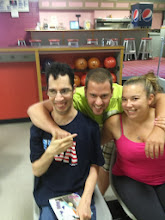
- Anthony D. Simmons
- My name is Anthony Simmons my birthday is May 12, 1988. I am currently in the Youth Development Major at Rhode Island College. I work at Swansea Total Fitness in Swansea Massachusetts. I have been working with the Total Fitness Clubs since November of 2012. I have some great ideas to utilize what I will accomplish with Youth Development including a group exercise for adolescence in the community of Swansea. If you have any question or would like to learn more follow my blog and leave a comment!
Thursday, October 17, 2013
10/18 Making Youth Have a Voice

Thursday, October 3, 2013
YIA and the service we as Youth Development Educators strive for!
Thursday, September 26, 2013
Youth Development Research


Friday, September 20, 2013
Blogging about Blogging
Why do we blog?
 We blog to help others view our ideas. The Wesch video shows us that the "machine" is us. We are the technology we use. Our Blog, Facebook, Twitter or even Myspace is how people view us! Having these social media resources help others understand our view points, ideas, concepts and have the potential to view it at a later date. I define blogging as an outlet to relieve the inner most thoughts that others may feel the same way about.
Why should we encourage youth to blog?
We blog to help others view our ideas. The Wesch video shows us that the "machine" is us. We are the technology we use. Our Blog, Facebook, Twitter or even Myspace is how people view us! Having these social media resources help others understand our view points, ideas, concepts and have the potential to view it at a later date. I define blogging as an outlet to relieve the inner most thoughts that others may feel the same way about.
Why should we encourage youth to blog?
 Youth will be connected to technology as an outlet. Youth at PASA during the Summer Scholars learned how to develop and wrote blogs. Blogs are the new diary of ideas that may be a struggle to be heard. People during this technological age find themselves "alone but together (Dr.Bogad)." For Youth social interaction is minimal and blogging can help them express their ideas and thought to the community of the internet world.

Thursday, September 19, 2013
Chaning my response
Mark Prensky Do They Really Think Differently? and Wesch The Machine is Us/ing Us
It is interesting to look at technology as a second language. My generation of the early 80’s have grown with the new age. The generation of the 90’s don’t know anything different than technology. If their computer goes down, register, calculator, phone or Ipad then that individual finds themselves lost without a prayer. Marc Prensky’s Digital Natives Digital Immigrants proves this statement to be true. Students have found Wrench Monkey to be amazing to learn new tools and strategies instead of the traditional lecture. The reading that followed also by Mark Prensky Do They Really Think Differently? Talks about the cultural environment can mold the thinking of one’s environment. So people who experience the same situation in different parts of the world will respond to the situation in different ways based on the “different” thought process. Further example would be the cultural difference of people which causes questioning of one’s decision making because that is what values have been instilled. Wesch The Machine is Us/ing Us dives into the idea that we as a society become the technology we use daily. The example that comes to mind is texting in which auto-correct will learn what you normally type whether it be an acronym or a blend of words that you tend not to separate.
My view point on the reading of Prensky was mid blowing. I found that I didn’t view our technology as a language but it truly is. I was thoroughly intrigued by the concept that teachers struggle to move with the times. This reading is the outline of how the older generation prior to the digital age feel. Wesch youtube made me a little confused by how fast the video went. I found myself a little lost throughout the video to keep up with the computer scripts. Things that were demonstrated in the video distracted me from the point they were trying to make.

Friday, September 13, 2013
Argument Gwen Sharp's Child Labor and Social Construct of Childhood
The author Gwen Sharp wrote about child labor and how the past has effected adolescent development. The pictures depict the children working at an early age to show the harsh environment they worked in. The descriptions made the article more real by talking about the amount, time and what type of work these children had to do at such an early age. Children had to be more grown up because they had “adult responsibilities.” I feel as though children could learn from responsibilities to build character, work ethic and accountability. These working conditions have been removed from the current American society because of the change in politics and cultural evolution of our modern society.
Question: How do you regulate and say a job is against the child labor laws that jeopardizes an adolescent’s “growth?”


Subscribe to:
Posts (Atom)